

By Jacob Martinez
Living in Burbank means experiencing a hot-summer Mediterranean climate: long, dry, warm summers and mild, wetter winters. While many in our city take comfort in the mild chill of winter or the predictability of summer heat, there are also shifting environmental factors—from air quality to wildfire risk—that increasingly demand our attention.
Climate Patterns & Long-Term Changes
Burbank’s average annual temperature hovers around 65 °F, with summer highs in the upper 80s and winter lows dipping into the mid-40s. Historically, our area receives about 13.9 to 17 inches of rain per year, with most rainfall happening between January and February. July and August tend to be almost completely dry. Months after rain events tend to be mild and moderate. These norms come from records spanning recent climate normals.
However, long-term climate data shows a trend: average annual temperature in Burbank has risen about +2.0 °C since the early 1940s, roughly +0.2 °C per decade. Rainfall totals fluctuate: some years far exceed the historical average, others fall well below—intensifying both drought and flood concerns.
Air Quality & Urban Heat Issues
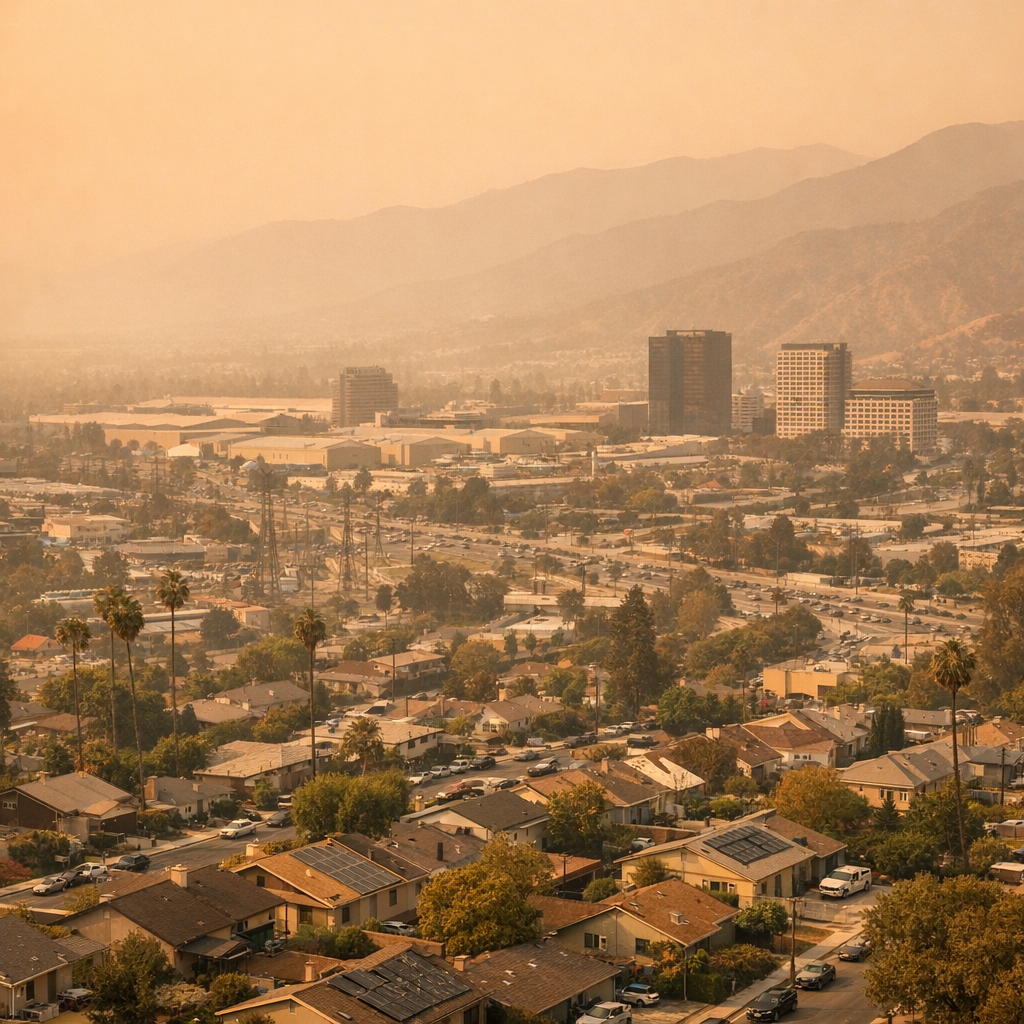
For much of the year, especially late summer through fall, a temperature inversion layer forms—warm air traps cooler air (along with pollutants) close to the ground. That increases smog and worsens air quality. Urban heat island effects make matters worse in densely built areas with little tree cover. Temperatures in those spots can register significantly hotter than in hillside or greener zones.
Wildfire smoke—whether from fires nearby or miles away—can also provoke air quality alerts. Even when AQI readings don’t reflect the small ash particles, residents can still experience respiratory irritation. It’s wise to monitor alerts, keep windows closed during smoky periods, use air purifiers if possible, and limit time outdoors when air quality is degraded.
Local Environmental Hazards to Watch
The Verdugo Mountains bordering Burbank mark a fire hazard zone. Vegetation, steep slopes, and dry weather all raise risk for wildfires incursion. Local planning recognizes this, and many hillside residents should stay attentive to official warnings.
Burbank also shares in the regional concern over groundwater contamination. Parts of Burbank lie within the San Fernando Valley (Area 1) Superfund Site, where treated water is blended into local supply to reduce certain contaminants.
Stormwater pollution is another recurring issue. Rain runoff carries litter, chemical residues, and fertilizers into local waterways and ultimately the ocean. The city’s stormwater permit (MS4) requires curbing non-stormwater discharges into drains and encourages practices like keeping gutters clear, reducing impervious surfaces, and using vegetation to absorb runoff.
What You Can Do Locally
- Support tree planting and shade projects—larger canopy cover helps cool neighborhoods and improve air quality.
- Stay informed about weather and air quality alerts via local resources and the South Coast AQMD.
- Reduce runoff pollution by avoiding pesticide/fertilizer use before rains, keeping gutters clean, and disposing of hazardous waste properly.
- During wildfire season or poor air days, limit strenuous outdoor activities and use air purifiers indoors if available.
- Keep adaptable: with climate trends shifting, infrastructure and behavior that used to suffice may no longer be reliable.
Climate and environmental dynamics are always in motion. Staying aware, contributing positively, and adapting where needed gives Burbank residents a stronger position to enjoy our city’s many virtues—while safeguarding health, safety, and quality of life.